

Families often search for craft ideas when they want something simple to do together, not a complicated project that requires a special shopping trip. The phrase activities brought to you by lookwhatmomfound lwmfcrafts points to a collection of family-friendly DIY and creative activity ideas associated with LookWhatMomFound. The most useful way to approach these ideas is to focus on practical projects, flexible materials, age-appropriate participation, and the experience of making something together.
What Does LWMFCrafts Mean?
LookWhatMomFound presents its craft content as a place for creative projects, family activities, seasonal ideas, recycled crafts, paper projects, and simple DIY activities. Its craft material covers children, parents, classrooms, and people who enjoy making things by hand.
That means readers should not expect one fixed type of project. The collection is better understood as a source of inspiration. One day, that may mean a paper craft. Another day, it may be a recycled-material project, a seasonal decoration, a collage, or an activity that turns making something into a family game.
This distinction matters because a good craft activity does not need to produce a perfect object. The value can come from choosing materials, testing an idea, changing the design, and talking about what happened.
What Kinds of Projects Can Families Try?
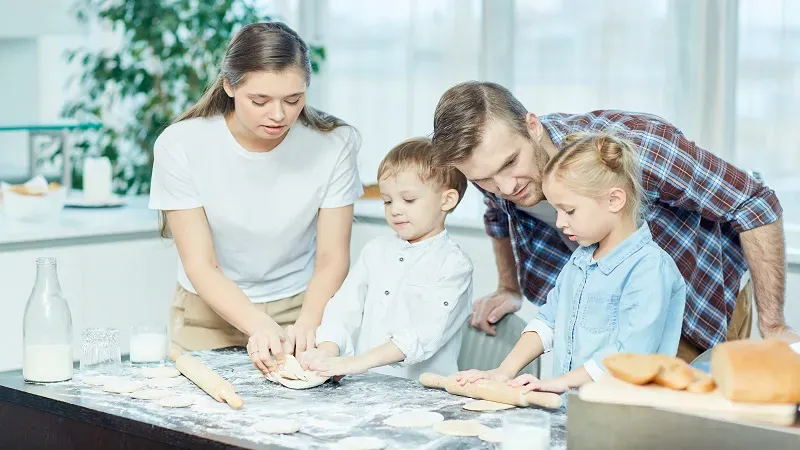
The most practical activities brought to you by lookwhatmomfound lwmfcrafts are the ones that can be adapted to what a family already has at home. Paper, cardboard, crayons, washable paint, glue, yarn, fabric scraps, and clean recycled containers can provide a starting point for many projects.
Paper and Drawing Projects
Paper is useful because it is inexpensive and easy to change. Children can make greeting cards, paper animals, folded shapes, simple masks, collages, or their own storybooks.
Instead of giving a child an exact model to copy, consider offering a theme. For example, ask them to create an imaginary animal, a house for a paper character, or a picture of a favorite place. This keeps the activity open to different abilities.
Recycled-Material Crafts
Boxes, paper tubes, cartons, and clean packaging can become pretend-play props or simple sculptures. A small box might become a vehicle, a building, a puppet stage, or a storage container for another craft.
The important rule is to inspect recycled materials first. Avoid sharp edges, dirty containers, unknown substances, and materials that are not clearly suitable for children.
Collage and Texture Activities
A collage can combine paper, fabric, leaves, yarn, cardboard, and other safe materials. Children can sort pieces by texture or color before arranging them, then change the composition as they work.
This type of activity is especially useful when the goal is exploration rather than a single finished result. Open-ended art allows children to experiment with materials without having to reproduce an adult’s example.
Seasonal and Family Projects
Seasonal crafts can give a familiar theme to an activity. Families might create decorations, cards, table pieces, or simple gifts for a holiday or special event.
A seasonal project does not need to be elaborate. A child can decorate a paper shape, create a family banner, or make a small drawing to display at home. The activity can be adjusted to the child’s age and attention span.
How to Choose the Right Activity for a Child’s Age
One of the biggest mistakes adults make is choosing a project because it looks attractive rather than because it matches the child’s current abilities.
For younger children, choose activities with large, easy-to-handle materials and limited steps. Tearing paper, making marks with crayons, pressing playdough, sticking large paper pieces, and exploring paint can be more appropriate than a project involving detailed cutting.
Preschool children can gradually handle more structured tasks. As hand skills develop, children become increasingly interested in materials such as scissors, clay, paint, paper, and crayons. Adult supervision remains important when children use tools.
Older children can take more responsibility for planning. Ask them to choose the materials, sketch an idea, estimate what they need, or find a way to change a project that did not work the first time.
The goal is not to make every child complete the same craft. The better goal is to give each child a reasonable challenge that allows them to participate independently while still receiving help when needed.
Why Open-Ended Crafting Can Be Better Than Perfect Crafts
Many online craft tutorials show a finished example. That can be helpful for understanding a technique, but it can also create unnecessary pressure. If a child’s project does not look like the picture, that does not mean it failed.
Process-focused art gives children more freedom to choose materials, experiment, and decide what their work becomes. NAEYC explains that this approach can support planning, problem-solving, expression, and small-motor activity while keeping the focus on exploration rather than producing identical finished products.
This is one reason activities brought to you by lookwhatmomfound lwmfcrafts can be used as starting points rather than strict recipes. Take the basic idea and let the child change the colors, materials, size, shape, or purpose.
For example, if the starting idea is a cardboard animal, one child may build a lion while another makes a robot. Both can be successful because the creative process is the point.
Simple Ways to Make a Craft Session Easier
A successful activity often depends more on preparation than on the complexity of the craft.
Start by limiting the number of materials. Giving a child every supply at once can make the table confusing. Two or three choices may be enough for a young child, while older children can manage a larger selection.
Protect the work surface before using paint, glue, or materials that may spill. Keep a small container nearby for scraps so cleanup becomes part of the routine.
Give children enough time to explore. Rushing toward a finished product can remove much of the value from an open-ended activity.
It is also helpful to accept changes. A child may start with a planned card and turn it into a puppet. Rather than correcting the change, ask what they want the new project to do.
Five Practical Activity Ideas to Adapt at Home
Here are five simple formats that fit the spirit of family craft content without requiring an exact shopping list.
1. Cardboard Character
Give a child a clean piece of cardboard and drawing materials. Let them create a character, then add paper pieces, yarn, or other safe decorations. Older children can write a name and a short story for the character.
2. Texture Collage
Collect safe pieces of paper, fabric, cardboard, or other household materials. Ask the child to arrange them by color, texture, or shape before making a collage.
3. Story Card Set
Cut several pieces of paper into similar sizes. Children can draw a character, place, object, or event on each card. Mix the cards and use them to invent a story together.
4. Nature-Inspired Artwork
After an appropriate outdoor walk, children can observe leaves, twigs, or other safe natural objects and use them as inspiration for drawings or collages. Do not collect anything that may be poisonous, sharp, contaminated, or protected by local rules.
5. Reuse Challenge
Place a few clean recyclable objects on the table and ask, “What could these become?” Give children time to sketch, build, or invent a pretend use for them. This turns a craft session into a problem-solving exercise.
How to Make Activities More Educational Without Making Them Feel Like School
Learning does not have to be announced as a lesson. A craft can naturally include counting, sorting, measuring, storytelling, vocabulary, and problem-solving.
Ask how many pieces a child used. Compare which object is longer. Invite them to describe a texture. Ask what might happen if two materials are combined. For older children, ask them to draw a plan before building.
The CDC recommends simple hands-on activities such as drawing, coloring, playdough, and matching games as ways to support learning and development in young children.
The key is to follow the child’s interest. If they are deeply focused on building, there may be no need to interrupt the activity with a long explanation.
Safety Comes Before Creativity
Activities brought to you by lookwhatmomfound lwmfcrafts should always be adapted to the child’s age and the materials available. Adult supervision is especially important when a project involves scissors, small pieces, heat, tools, adhesives, or any material that could be swallowed.
The American Academy of Pediatrics recommends choosing art supplies carefully, looking for appropriate safety labeling, supervising children while they use art materials, and teaching children to clean up and wash their hands afterward.
For young children, avoid small loose parts that can be choking hazards. Use child-appropriate scissors rather than assuming a child is ready for adult tools. Paints, markers, glues, and other supplies should be used according to their labels.
Safety also includes the workspace. A stable table, washable surface, good lighting, and easy access to cleanup materials can prevent many avoidable problems.
What If You Do Not Have Craft Supplies?
You do not need a dedicated craft room. Activities brought to you by lookwhatmomfound lwmfcrafts can be interpreted broadly enough to work with ordinary household materials.
Start with paper and drawing tools. Add clean cardboard packaging when available. Save useful scraps from gift wrapping or paper bags. Keep a small box for safe craft leftovers so children can choose from it during future projects.
Process-focused art can also use materials from home and nature, so creative exploration does not have to depend on expensive supplies.
The important limitation is safety. A material being free or recyclable does not automatically make it suitable for children.
How Parents Can Keep Children Interested
Interest usually lasts longer when children have some control. Let them choose between two activities, decide the colors, name the finished creation, or change the rules of a simple craft game.
Avoid judging the result only by how attractive it looks. Ask questions about the process instead. “What were you trying to make?” and “What would you change next time?” can lead to more useful conversations than simply asking whether the finished object looks good.
Activities brought to you by lookwhatmomfound lwmfcrafts work best as invitations to create, not tests that children have to pass.
Parents can also keep a small rotation of activity types. One day might involve drawing, another might use recycled materials, and another could focus on sensory play. Variety prevents the craft box from feeling repetitive.
A Simple 30-Minute Family Craft Routine
If you want a repeatable routine, keep it simple. Spend the first five minutes choosing the activity and setting out materials. Use the next fifteen to twenty minutes for making and exploring. Reserve the final five minutes for sharing what was created and cleaning the workspace.
The exact timing does not matter. Some children will finish quickly, while others will want to continue. The routine is useful because it removes the pressure of deciding what to do every time boredom appears.
The best activities brought to you by lookwhatmomfound lwmfcrafts are therefore not necessarily the most complicated ones. They are the ideas that can be adjusted to the child, the available materials, the amount of time, and the family’s comfort level.
Final Takeaway
The strongest reason to explore activities brought to you by lookwhatmomfound lwmfcrafts is not the promise of a perfect finished craft. It is the opportunity to turn ordinary materials into a shared creative experience.
LookWhatMomFound’s craft content covers a broad mix of family projects, seasonal ideas, and simple DIY activities. The most useful approach is to take those ideas as inspiration, adapt them for the child’s age, encourage experimentation, and keep safety in view.
A cardboard box, a few crayons, and an interested child can be enough to start. The finished object may be temporary. The skills, conversation, and shared experience can be much more valuable.
Frequently Asked Questions
What is LWMFCrafts?
LWMFCrafts refers to craft and creative activity content associated with LookWhatMomFound. It covers family-friendly ideas such as paper crafts, recycled-material projects, seasonal activities, sensory play, and other hands-on projects.
Are these activities suitable for different age groups?
Yes, but the same project may need to be changed for different ages. Younger children generally need larger materials, fewer steps, and closer supervision. Older children can handle more planning and independent work.
Can I make these crafts without buying special supplies?
Many craft concepts can be adapted using paper, cardboard, crayons, washable paint, glue, yarn, fabric scraps, and clean household packaging. The exact materials depend on the project.
Are crafts good for children’s development?
Hands-on art can give children opportunities to use small motor skills, explore materials, make choices, communicate ideas, and solve simple problems. These benefits should be viewed as opportunities rather than guarantees for every child.
How can I make craft time less messy?
Use a tray or washable surface, prepare the materials before starting, limit the number of supplies, and keep a small container nearby for scraps. Choose low-mess activities when you have limited cleanup time.
Should parents let children change the project?
Usually, yes. Open-ended creative activities work well when children have some control over the materials and final result. An unexpected change can become part of the creative process rather than a mistake.